Supply Chains and Strains
Reiko Piekarski, Director of Coffee Programs | Fortuna Enterprises, LLC
For close to two years we have been experiencing a tremendous shift in our day-to-day routines. Many of these changes spawned out of the concern for safety, however the largest change might have developed as a result from the ongoing problem of sourcing needed goods and materials. As consumers, we have all felt these strains even when trying to purchase toilet paper or hand sanitizer. Additionally, during this time, many restaurants and cafes are continuing to see a significant increase in their take out orders adding to this existing shortage in supplies. If there’s one thing everyone can agree upon, it is that things aren’t how they used to be. So…
How exactly did we get into this mess? Can we get out of it? When will things return to normal?
The Supply Chain
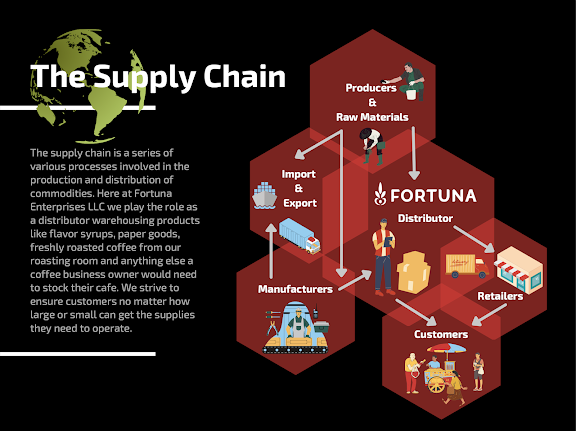
The supply chain involves a complex synergy between multiple businesses and corporations. This includes those who gather raw materials, suppliers, manufacturers, distributors, businesses, and finally the consumer. As more people have continued to stay at home, the strain upon the supply chain has increased. This increased strain has and continues to present challenges to everyone involved and has showcased these present bottlenecks in their most vulnerable areas.
Bottlenecks
With so many players in the supply chain, bottlenecks are bound to occur. One of the biggest and most notable examples that made the news this year is the giant container ship that blocked the Suez Canal. The extended delays due to the ship running aground was cause for companies to consider alternative routes in order to get to goods to their destinations. Diversions and delays like this can be costly for both businesses and consumers. In more currents news: clogged ports where container ships unload goods are also compounding the delays. The Port of Long Beach and the Port of Los Angeles represent roughly 40% of imported goods coming into the US alone. On a normal day there are not ships waiting in the ocean to be guided into the port for unloading. Right now, there are roughly 50, with cargo containing anything from glass jars for canning companies, to paper cups for our café customers. The combination of labor shortages and the increase of demand for goods has only exacerbated this logistical nightmare. The trucking industry is suffering labor shortages by the tens of thousands because training and hiring new drivers is not happening fast enough. To stabilize this cascading domino effect throughout the supply chain, we not only need solutions, but also a working force to alleviate the bottlenecks.
Climate Change
There are of course factors which are completely out of our control which can have a huge impact on the movement of goods. One key example of this is climate change. It is impacting global agricultural systems which run throughout the world's delicate food system. Coffee producers along with other farmers and providers of raw materials all face this growing challenge in real time. These impacts trigger a cascading effect which places further strains on the supply chains and livelihoods of production communities. For instance, an unexpected frost in Brazil damaged coffee crops, and caused devastating consequences. Brazil happens to be the world's top producer of coffee which means these losses sustained due to the unprecedented frost will pass on higher costs to consumers. And-it is not just extreme cold. Unusual rainfall patterns or even lack of rain impact the timing of coffee plant production.
Global coffee prices are already volatile and there is an increasing concern of how the impacts of struggling supply chains compounded by climate change will impact the coffee industry. Early this fall, Colombian farmer's withheld 1 million bags of coffee. Colombian coffee production makes up roughly 10% of the global output making it the second leading producer behind Brazil. Why is the coffee being held back? Between shipping shortages, increasing costs and recovering losses from drought and unexpected frosts, farmers are holding out for the C-Market price to increase. As of October, the C-Market prices were averaging at about $2.14 a pound which has doubled in price since the year previous. Dramatic weather fluctuations effect not just agricultural crop prices across the globe but the safe transport of these raw goods as well.
The Bull Whip Effect
We have all played the game "Telephone" at some point in our youthful times. A message is whispered into the ear of the first individual and then passed down by communicating the message just as it was received. Whether or not the original message reaches the last individual is entirely up to the collaborative effort of all the people in the communication line. When it comes to the supply chain, the bullwhip effect is a situation which results from the distortion of information from one end of the supply chain to the other. Unlike the childhood game where the miscommunication usually results in laughter, the erratic variations in demand increase as it works its way up the value chain.
Collaboration, or the lack thereof, can have a dramatic overall impact on performance which can contribute to costs, lead times, and stock inventory. The pandemic exacerbated multiple points and it only presented us with glaring clarity how fragile the supply system truly is. The demand variability shifted violently with the pandemic whether it was disposable masks, gloves, packets of ketchup, paper goods to clear plastic cups. The forecasted errors and the impacts of manufacturing, inventory management, and logistical operations in moving around those needed goods all got jammed up.
The combined forces of the pandemic, natural disasters, and other crises continue to disrupt supply chains. These circumstances have forced all of us to rethink how we source consumable goods. We all must develop a fuller view of supply chains by optimizing the network. Doing our best to forecast demand more accurately instead of relying on the "just-in-time" mentality. We see panic buying and hoarding of goods play out in full force ahead of a hurricane or a snowstorm. Panic buying perpetuates the frantic scramble to get resources necessary for survival whether it is a business or just yourself.
So how do we help develop more sustainable purchasing practices to ease some of the supply bottlenecks? Keep in mind the friendly bubbly letters which read, "Don't Panic!". Patience will go a long way right now. We are all waiting for stabilization in the supply chain. Take the extra time to make better decisions as well as develop more sustainable business practices in areas where you have the control. The rest will come in due time.
Resources:
Why The Global Supply Chain Is Still Clogged - And How To Fix It: NPR
Keep calm, it's just the bullwhip effect: NPR
Teaching Takes Off: Flight Simulators for Management Education
Supply Chain Management: Coffee Beans
With Prices Rising, Colombian Farmer's Withhold 1 Million Bags of Coffee: Sprudge
Why is Frost in Brazil Causing Global Coffee Prices to Increase?
Video: Coffee Crops at Risk as Brazil Temperatures Plunge

